• You must be logged in to see or use the Shoutbox. Besides, if you haven't registered, you really should. It's quick and it will make your life a little better. Trust me. So just register and make yourself at home with like-minded individuals who share either your morbid curiousity or sense of gallows humor.

Turd Fergusen

Veteran Member
Good Lord, their tit must really be in the wringer!
ap688498854190-1a854301544d2cd6c2fb4b56c22fa87633467c02-s800-c85_jfif.jpg

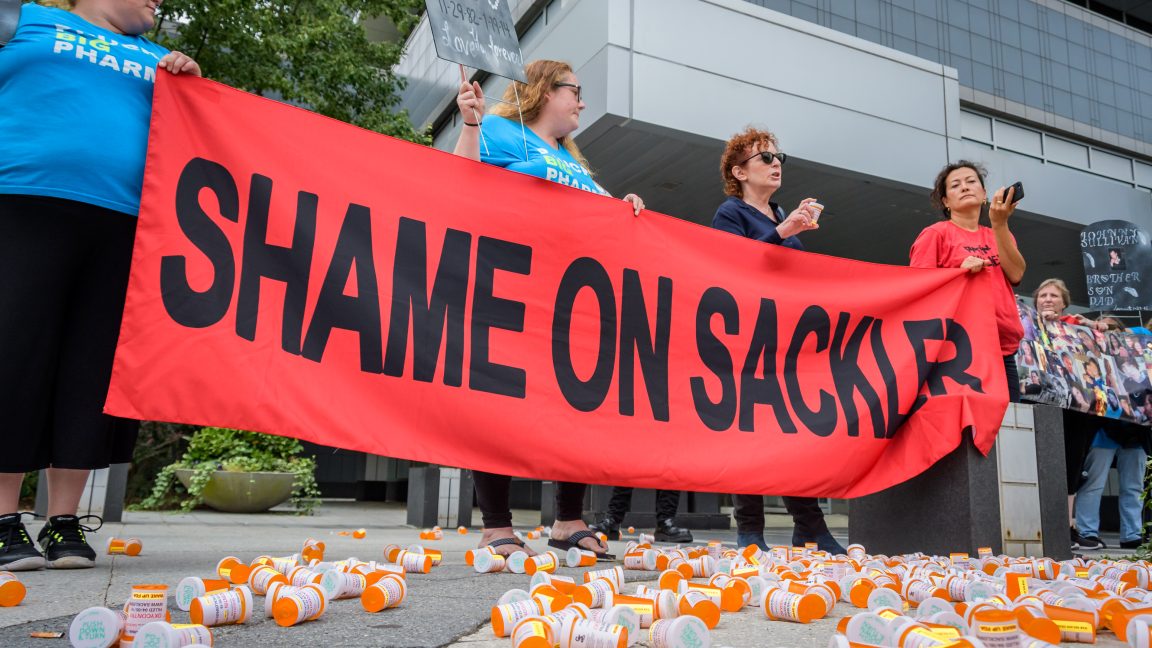
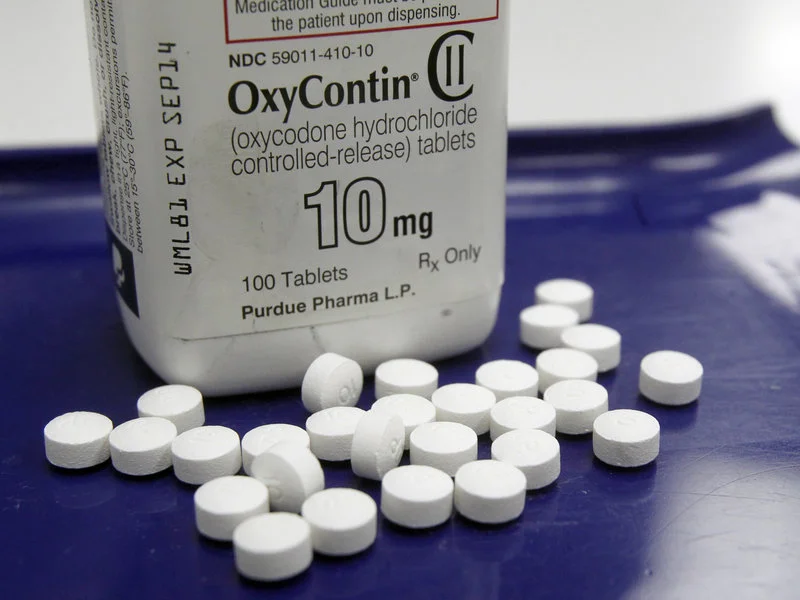
The maker of OxyContin, Purdue Pharma, and its owners, the Sackler family, are offering to settle more than 2,000 lawsuits against the company for $10 billion to $12 billion. The potential deal was part of confidential conversations and discussed by Purdue's lawyers at a meeting in Cleveland last Tuesday, Aug. 20, according to two people familiar with the mediation.

Brought by states, cities and counties, the lawsuits — some of which have been combined into one big caseallege the company and the Sackler family are responsible for starting and sustaining the opioid crisis.

At least 10 state attorneys general and the plaintiffs’ attorneys gathered in Cleveland, where David Sackler represented the Sackler family, according to two people familiar with the meeting. David Sackler, who was a board member of the company, has recently been the de facto family spokesperson.

Full Story:
 
Last edited by a moderator:
"The maker of OxyContin, Purdue Pharma, and its owners, the Sackler family, are offering to settle more than 2,000 lawsuits against the company for $10 billion to $12 billion."

And that there is like pocket change to them. I'd like to see the plaintiffs hold out for 20 billion.

And also, take it from me: Motrin will do more for your pain and inflammation than this shit ever will. And the withdrawals look utterly horrifying. Don't mess with the opioids.
 
It definitely only makes me sick right off the bat and does nothing whatsoever for pain. A placebo would do a better job!

Part of their deal with the feds is to relinquish ownership of the company, but that won't hurt them either. They will still live like kings and queens.
 
Good Lord, their tit must really be in the wringer!


Full Story:
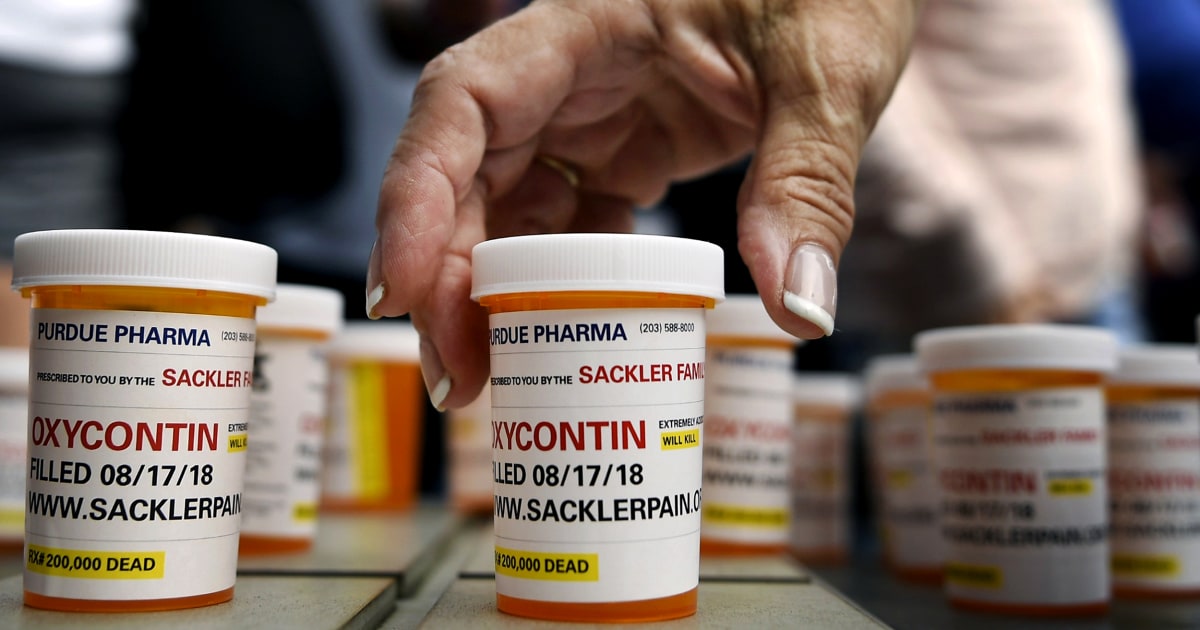
Funny the addicts nor their families will see the money.. families & orphans won’t see the money.. the people who actually paid for these people’s profits won’t be compensated or put thru rehab.. their children won’t have trust funds for college.. fuck Pharma and everyone collecting that didn’t pay with their happiness health families and lives
 
I wonder from time to time why the DA's didn't go after Purdue/Sackler under asset forfeiture laws.

I mean, that was the whole point of crafting them in the first place right? Go after the money of those that profit the most. But instead they went the civil route (case grab, not justice), and now they're negotiating an 'out' so that none of the major players will feel any repercussions.

Let's put that family in the slam and leave them all alone... Maybe a few of them will pull an Epstein because they can't handle jail...
 
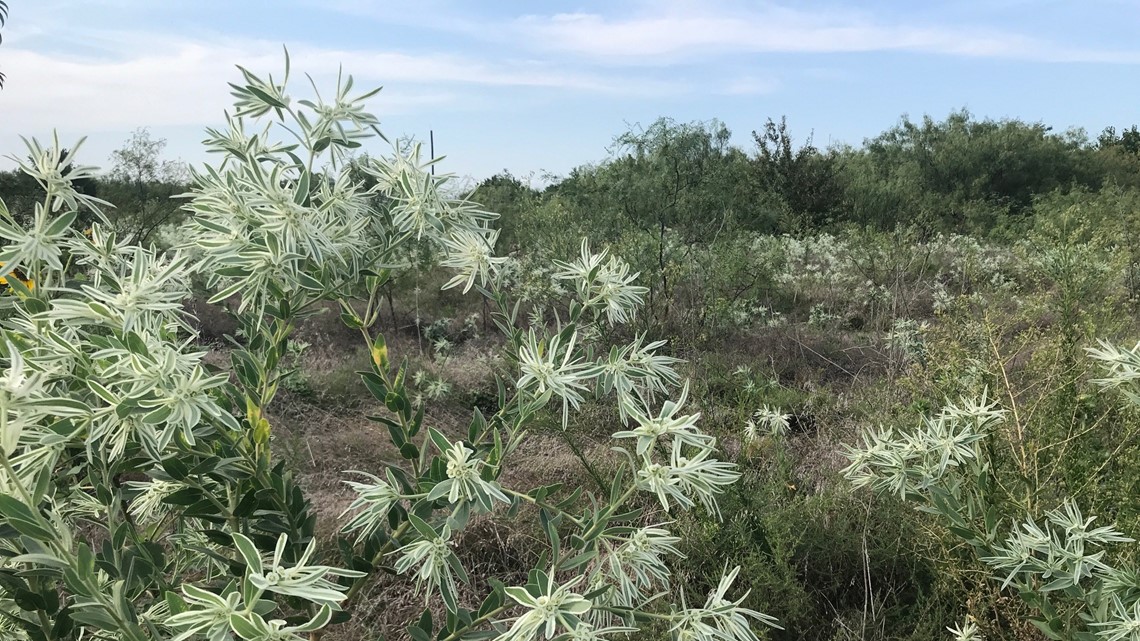
DENTON, Texas — “See how pretty they are?” notes Camilia Maier, walking through a garden on the campus of Texas Woman’s University. “They’re very nice.”

She stops to pulls a leaf off one of the plants she was admiring. White sap starts running down the stalk.

“You see it coming out dripping?” she asks. “The chemicals in this sap – that’s what we use.”

According to Maier and her TWU colleagues, the chemicals in a plant commonly called "snow on the prairie" might lead to a breakthrough in the fight against opioid addiction.

Euphorbia bicolor is the plant’s scientific name.

Dayna Averitt, an assistant professor in TWU’s department of biology where Maier works, had previously worked in San Antonio with scientists researching new solutions to ease chronic pain suffered by military veterans.

When Averitt took her job at TWU, she heard Maier and a graduate student were researching euphorbia bicolor as a potential anti-cancer drug.

“The euphorbia name stuck with me,” Averitt said. “I’m like, 'Why do I know that name?' I don’t know anything about plants. I’m a neuroscientist.”

It stuck out because it sounded a lot like one of the plants her former colleagues had been researching in San Antonio.

Once Maier confirmed the plants were in the same family, they launched a powerful research project on a plant that had never been studied.

They discovered a chemical in sap from snow on the prairie appears to do what opioids do: It stops pain. But it isn’t addictive.

They injected the sap into cells and saw that nerve endings were turned off.

“We’re trying to target the signals as they make their way to the brain,” Averitt explained. “So if we can turn them off like a light switch for a long period of time, the brain doesn’t even know about it and you don’t have that pain.”

Snow on the prairie is native to our region, and it’s currently in bloom in fields across North Texas.

“It’s a relative of the poinsettia,” Maier said. “It blooms in Texas, Oklahoma, Arkansas, Mississippi.”

The sap is toxic, so it is not something that would be ingested.
[....]
Their research has been published, but they need additional funding for further testing. They hope to gain approval for clinical trials in the future.

“We need to make sure it doesn’t hurt other cells,” Averitt said. “You’re harming nerve endings, which we want to do, but we want to make sure it isn’t acting as a toxin on other cells as well.”

“You can’t help but look to the future and be excited, like maybe this could be something that could be a real breakthrough.”


I wonder from time to time why the DA's didn't go after Purdue/Sackler under asset forfeiture laws.

I mean, that was the whole point of crafting them in the first place right? Go after the money of those that profit the most. But instead they went the civil route (case grab, not justice), and now they're negotiating an 'out' so that none of the major players will feel any repercussions.

Let's put that family in the slam and leave them all alone... Maybe a few of them will pull an Epstein because they can't handle jail...

"We had to flee New York and move to Palm Beach Florida. What else do you want from us?"
201908-Sackler-tout.webp
 
Nice try Purdue!

'Blood money'? Purdue settlement would rely on opioid sales

The tentative multibillion-dollar settlement with OxyContin maker Purdue Pharma would raise money to help clean up the opioid mess by ... selling more OxyContin.
That would amount to blood money, in the opinion of some critics. And it’s one reason two dozen states have rejected the deal.
“The settlement agreement basically requires the settlement payments to be made based on the future sales and profits of opioids. That doesn’t really feel to me like the right way to do this,” Massachusetts Gov. Charlie Baker said this week.
 
Purdue Pharma's Sackler family 'will keep their billions' and are prepared to pay out $3 billion to opioid crisis victims - but only if they face no criminal liability - as bankruptcy judge suggests no claims can be made against individual family members
Now The New Yorker reports the Sacklers, who own Purdue Pharma, are prepared to pay out $3 billion to opioid crisis victims - but only if they face no criminal liability. In court papers the family say they will make the payout if released from 'all potential federal liability arising from or related to opioid-related activities.'

Bankruptcy judge Robert Drain has also suggested a release should bar other authorities from bringing suits against the Sacklers in the future, according to The New Yorker. He told the court in February the 'only way to get true peace, if the parties are prepared to support it and not fight it in a meaningful way, is to have a third-party release'.

One attorney told The New Yorker: 'Criminal liability is not something that should be sold. It should not depend on how rich they are. It's not right.'

Full Story:
https://www.newyorker.com/news/news-desk/the-sackler-familys-plan-to-keep-its-billions
 
Purdue Pharma pleads guilty to federal criminal charges in $8.3 billion settlement tied to US opioid crisis
WASHINGTON — The Justice Department announced Wednesday it reached an $8.3 billion settlement with OxyContin-maker Purdue Pharma, as a result of criminal and civil investigations by federal prosecutors into the company’s marketing of opioid painkillers.
Purdue Pharma agreed to plead guilty in federal court in New Jersey to three felony counts for defrauding the United States and violating the anti-kickback statute from 2009 to 2017 in what the Justice Department said was “the largest penalties ever levied against a pharmaceutical manufacturer.” The $8.3 billion global settlement includes a criminal fine of $3.544 billion, criminal forfeiture of $2 billion and a civil settlement of $2.8 billion.
Federal prosecutors alleged the company, which manufactured millions of opioid pills during the height of the epidemic, paid two doctors through Purdue’s doctor speaker program and an electronic health records company to drive up prescriptions for its opioid products, including its top seller OxyContin.

“The kickback effectively put Purdue marketing department in the exam room with their thumb on the scale at precisely the moment doctors were making critical decisions about patient health,” District of Vermont U.S. Attorney Christina E. Nolan said at the Justice Department briefing.
Purdue acknowledged the wrongdoing the company was resolving, saying Wednesday that it is a “very different company” today.

Full Story:
 
Purdue Pharma pleads guilty to federal criminal charges in $8.3 billion settlement tied to US opioid crisis


Full Story:
Pleading guilty seems extremely out of character for a large pharmaceutical company. It makes me wonder if they probably seeing the writing on the wall and their days of doping people are numbered. This part of the article really sticks out to me:

"The $8 billion figure is largely symbolic — the bankrupt drugmaker is already indebted to states, communities and other creditors. The company is among several drugmakers and distributors embroiled in litigation over the deaths and economic devastation inflicted by the opioid epidemic. In the past two decades, more than 400,000 Americans, many in West Virginia, have died from opioid overdoses. "


I'm sure there are plenty of people who benefited from their drugs when they needed them but the collateral and cultural damage caused by what has for years been openly called an "opiod epidemic" can never be undone. Those who have become addicted will always be fighting that addiction for the rest of their lives. I'm glad the justice department is holding their feet to the flames.
 
The people who were/are being prescribed those drugs are pretty naive if they didn't realize if it makes you feel good, it's addictive. It's just a matter of degree between actual addiction and dependence. The difference for the user is the level of suffering when trying to stop taking them. Regardless of whether you take them because you actually need them or you're using recreationally, it certainly pays to be well informed. I never took any prescribed medicine without looking it up and actually had a PDR back in the old days before google.
 
Billionaire Sackler family to relinquish control of OxyContin maker Purdue Pharma in bankruptcy plan and agrees to pay nearly $4.3 BILLION to resolve thousands of opioid lawsuits
The billionaire Sackler family, who own OxyContin maker Purdue Pharma, has agreed to pay nearly $4.3 billion to resolve thousands of lawsuits accusing them of fueling the opioid crisis in the United States.

The huge payment from the Sacklers is part of a larger restructuring plan filed by Purdue on Monday night that intends to get the Connecticut-based pharmaceutical giant out of bankruptcy.

Purdue's $10 billion plan to emerge from bankruptcy calls for it to be transformed into an entity that would see the Sacklers relinquish control of the company and steer revenue directly to plaintiffs.

The billion dollar contribution from the Sackler family, who have denied any wrongdoing, would see them freed from opioid-related litigation.

Purdue's plan was filed late on Monday night in US Bankruptcy Court in White Plains, New York after months of negotiations.

Full Story:
OxyContin maker Purdue to use trusts and Sackler cash to settle opioid lawsuits | Daily Mail Online
 

Purdue Pharma exit plan gains steam with OK from more states​

OxyContin maker Purdue Pharma's plan to reorganize into an entity whose profits will be used to combat the U.S. opioid crisis got a big boost as 15 states have dropped their objections to the new business model​

OxyContin maker Purdue Pharma’s plan to reorganize into a new entity that helps combat the U.S. opioid epidemic got a big boost as 15 states that had previously opposed the new business model now support it.
The agreement from multiple state attorneys general, including those who had most aggressively opposed Purdue's original settlement proposal, was disclosed late Wednesday night in a filing in U.S. Bankruptcy Court in White Plains, N.Y. It followed weeks of intense mediations that resulted in changes to Purdue's original exit plan.
The new settlement terms call for Purdue to make tens of millions of internal documents public, a step several attorneys general, including those for Massachusetts and New York, had demanded as a way to hold the company accountable.
Attorneys general for both states were among those who agreed to the new plan, joining about half the states that had previously approved it.
In a statement Thursday, New York Attorney General Letitia James said the deal is not perfect but will help deal with the crisis. “We’ll be able to more quickly invest these funds in prevention, education, and treatment programs, and put an end to the delays and legal maneuvering that could possibly continue for years and across multiple continents,” she said.
North Carolina Attorney General Josh Stein noted Thursday that the deal includes about $1.5 billion more than it initially did.
In a statement, members of the Sackler family called the support of more states “an important step toward providing substantial resources for people and communities in need."
Still, nine states and the District of Columbia did not sign on.
Purdue said in a statement that it will try to build “even greater consensus” for its plan.
Purdue sought bankruptcy protection in 2019 as a way to settle about 3,000 lawsuits it faced from state and local governments and other entities. They claimed the company's continued marketing of its powerful prescription painkiller contributed to a crisis that has been linked to nearly 500,000 deaths in the U.S. over the last two decades.
The court filing came from a mediator appointed by the bankruptcy court and shows that members of the wealthy Sackler family who own Purdue agreed to increase their cash contribution to the settlement by $50 million. They also will allow $175 million held in Sackler family charities to go toward abating the crisis.
In all, Sackler family members are contributing $4.5 billion in cash and assets in the charitable funds toward the settlement. They are not admitting any wrongdoing and no court has found any by a family member.
The agreement also prohibits the Sackler family from obtaining naming rights related to their charitable donations until they have paid all the money owed under the settlement and have given up all business interests related to the manufacturing or sale of opioids.
Massachusetts Attorney General Maura Healey, who had been the first attorney general to sue members of the Sackler family, praised the modified deal in a statement early Thursday. She pointed to the $90 million her state would receive and the way the company could waive attorney-client privilege to release hundreds of thousands of confidential communications with lawyers about its tactics for selling opioids and other matters.
“While I know this resolution does not bring back loved ones or undo the evil of what the Sacklers did, forcing them to turn over their secrets by providing all the documents, forcing them to repay billions, forcing the Sacklers out of the opioid business, and shutting down Purdue will help stop anything like this from ever happening again,” Healey said.
Purdue's plan also calls for members of the Sackler family to give up ownership of the Connecticut-based company as part of a sweeping deal it says could be worth $10 billion over time. That includes the value of overdose-reversal drugs the company is planning to produce.
Money from the deal is to go to government entities, which have agreed to use it to address the opioid crisis, along with individual victims and their families.

Full Article:
 

Sackler family, makers of OxyContin, won't settle billions unless let off the hook​

By Members of the family that owns OxyContin maker Purdue Pharma won't contribute billions of dollars to a legal settlement unless they get off the hook for all current and future lawsuits over the company's activities, one of them told a court Tuesday in a rare public appearance.
David Sackler, the grandson of one of the brothers who nearly 70 years ago bought the company that later became Purdue, testified at a hearing in federal bankruptcy court in White Plains, New York, that without those protections, "I believe we would litigate the claims to their final outcomes."

That's the heart of argument over the settlement plans of the family and the company, based in Stamford, Connecticut.

Two offices of the U.S. Justice Department, nine states and the District of Columbia are objecting to the company's settlement plan largely because it would grant legal protection to members of the wealthy Sackler family even though none of them are declaring bankruptcy themselves.

The concept has sparked protests, as well as federal legislation known as the SACKLER Act that would bar these deals, known as third-party releases. They are granted by bankruptcy courts in some parts of the U.S., but not all. The bill has sputtered in Congress.
 

Judge conditionally approves Purdue Pharma opioid settlement​

A federal bankruptcy judge on Wednesday gave conditional approval to a sweeping, potentially $10 billion plan submitted by OxyContin maker Purdue Pharma to settle a mountain of lawsuits over its role in the opioid crisis that has killed a half-million Americans over the past two decades.

Under the settlement reached with creditors including individual victims and thousands of state and local governments, the Sackler family will give up ownership of the company and contribute $4.5 billion but will be freed from any future lawsuits over opioids.

The drugmaker will be reorganized into a new company with a board appointed by public officials and will funnel its profits into government-led efforts to prevent and treat opioid addiction.

Also, the settlement sets up a compensation fund that will pay some victims of drug addiction an expected $3,500 to $48,000 each.
 
This was unexpected.

Not unwelcome mind you, just unexpected...
Billionaire Sacklers’ immunity threatened as DOJ moves to block opioid deal
The DOJ argues the immunity is unconstitutional and expects the deal to be overturned.

Beth Mole - 9/16/2021

The Department of Justice is fighting to strip the billionaire Sackler family of the sweeping legal immunity granted as part of a controversial $4.5 billion opioid settlement.

The department filed a motion late Wednesday to block the implementation of the settlement until appeals can be heard in a higher court. Attorneys for the department argued that some aspects of the deal could go into effect quickly, complicating the appeal, according to NPR. Along with the DOJ, Connecticut, Maryland, the District of Columbia, and Washington state are also preparing to fight the settlement.
The Justice Department also requested an expedited hearing within the next two weeks.

William Harrington, who serves as US trustee for the Justice Department, said in filings Wednesday that Federal Bankruptcy Judge Robert Drain was wrong to approve the settlement on September 1 and that the decision would likely be overturned.

The settlement essentially dissolves Purdue Pharma, which was owned and largely run by the Sacklers. The company aggressively and deceptively marketed OxyContin beginning the 1990s and is largely seen as sparking the devastating epidemic of opioid addiction and overdoses that has killed nearly 500,000 people in the US over the last two decades. Purdue pleaded guilty twice for wrongdoing in its marketing of OxyContin in that time. The settlement put to rest thousands of opioid-related lawsuits against Purdue, which had declared bankruptcy under the crushing litigation.

The Sacklers were directly involved in Purdue's opioid business and, by their own account, pocketed more than $10 billion from opioid sales. But the family has repeatedly claimed no wrongdoing and said it acted ethically.

Continues at link
 
Thanks. I have Hulu, so I intend to watch it even though I know it will drive me crazy.

I can't take opioids at all, because they only make me nauseous and even dramamine doesn't help. So when I had really bad and painful tendonitis, I was prescribed an opioid although I don't remember which one. When I asked for something else (Fiorinal) that I knew I could take, the doctor shot that down very quickly and said it only helped headaches and nothing else while my personal experience told me otherwise. It was very discouraging to realize I would be given nothing for the overwhelming pain I was suffering. It took years for my tendonitis (right arm only) to become manageable, and I have to credit the below supplement.
full

I've been taking that for years now, and it did take that long for me not to have pain every time I had to use my right arm in repetitive motions. Now, it rarely bothers me at all. I guess my story is also a lesson in patience and understanding that some conditions just take longer to resolve.
 
Back
Top