• You must be logged in to see or use the Shoutbox. Besides, if you haven't registered, you really should. It's quick and it will make your life a little better. Trust me. So just register and make yourself at home with like-minded individuals who share either your morbid curiousity or sense of gallows humor.

Turd Fergusen

Veteran Member
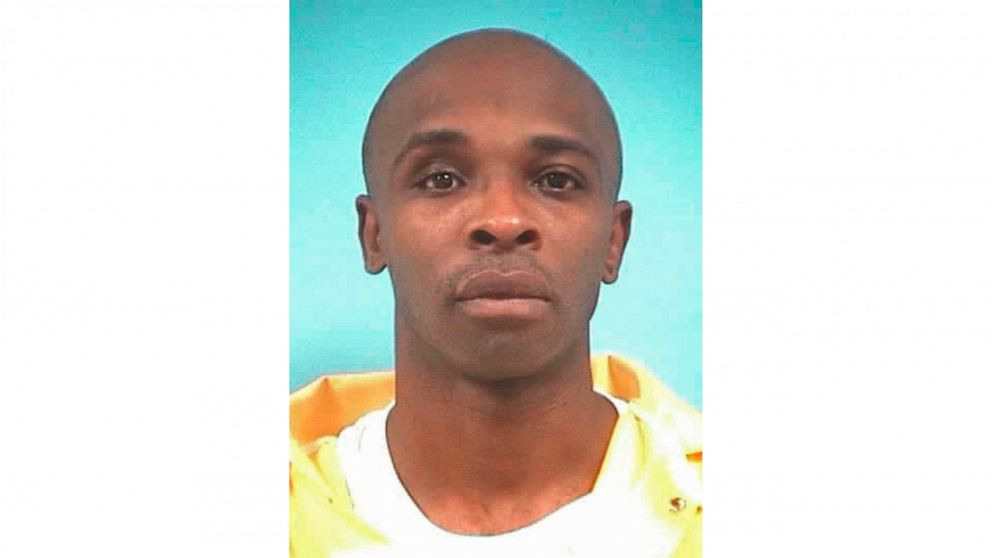
skynews-willie-nash-mississippi_4893692.webp

Judges have been accused of racial injustice for handing an African-American man a 12-year sentence after he asked a jail officer to charge his mobile phone.

Willie Nash, 39, had been booked in to the Newton County prison in Mississippi on a misdemeanour charge when the offence took place.
He was found to have brought the phone in when he asked an employee for "some juice".
The jailer took the request to mean Nash wanted a drink, until he handed over his handset to be charged.

The jailer gave the device to a deputy sheriff, who later unlocked it using a pass code provided by Nash and found he had sent text messages to his wife.
Justice Leslie King, the only African-American on the nine-member Mississippi supreme court, said Nash could have avoided punishment entirely because it was not clear whether he had even been searched - or told not to bring his phone into the jail.


Nash did not seek to overturn his conviction, but argued on appeal that the sentence handed down in August 2018 was grossly disproportionate and violated a constitutional ban on cruel and unusual punishment.

Full Story:
 
This sentence is completely absurd. If they can't prove he was told no cell phones were allowed and also searched (and therefore hid it intentionally to break the rules), there should not be any punishment at all.

They didn't make the rules clear, and he seemingly didn't know phones were not allowed. If he had snuck in an illegal phone on purpose, he would clearly not have been asking the guard to charge it for him. Duh.

He was in jail for a misdemeanor and ended up with a 12 year sentence because he had his phone with him. Insane.
 
JACKSON, Miss. -- The Mississippi Supreme Court should overturn an “astonishing” 12-year prison sentence given to an African American man who took a mobile phone into a jail cell when he was arrested on a misdemeanor charge, attorneys argued in court papers filed Thursday.

The state's high court upheld Willie Nash's sentence Jan. 9. Critics have slammed the case an example of racial injustice.

The new appeal asks justices to reconsider and reverse their own decision. The appeal doesn't mention race, but it notes that the case drew international condemnation. It also says Nash received a longer sentence for possessing a cellphone in jail than Mississippi courts would impose for second-degree arson or poisoning someone with the intent to kill.

“Nash’s astonishing sentence is grossly disproportionate to the act for which he stands convicted. It is cruel and unusual,” Will Bardwell, an attorney for the Southern Poverty Law Center, wrote in the appeal Thursday.
[....]
The appeal also says Mississippi is one of only three states where a 12-year sentence for having a cellphone in jail is even possible. Research found no cases of such a long sentence being given in the other two states, Arkansas and Illinois.

"There is no indication that anyone outside Mississippi has ever received a sentence as long as Nash’s for doing what Nash did," Bardwell wrote.

Nash, now 39, didn't seek to overturn his conviction, but argued on his first appeal that his August 2018 sentence was grossly disproportionate, violating the constitutional ban on cruel and unusual punishment.

Mississippi justices unanimously rejected his argument.

“Though harsh, Nash’s sentence falls within the statutory range,” Justice James Maxwell wrote for the high court Jan. 9.

A 2012 Mississippi law sets a sentencing range of three to 15 years for inmates found with deadly weapons, cellphones or components of cellphones in state jails and prisons.

Corrections officials have said for years that contraband cellphones are a problem in Mississippi's jails and prisons. During an outbreak of violence that left five inmates dead and an undisclosed number of others injured between Dec. 29 and Jan. 3, inmates used cellphones to take photos and videos that showed prisoners sleeping on the floor of a crowded cell and smoke filling a corridor and cells at the Mississippi State Penitentiary at Parchman.

One of the justices who joined in the unanimous ruling Jan. 9 said that while the sentence is legal, the prosecutor and trial judge could have avoided punishing Nash entirely.

Justice Leslie King is currently the only African American justice on the nine-member court. He wrote that Nash's case “seems to demonstrate a failure of our criminal justice system on multiple levels" because it's not clear whether Nash was properly searched or told not to take his phone into his cell.
[....]
The trial judge told Nash to “consider yourself fortunate” in getting the 12-year sentence, because Nash had previous burglary convictions and could have been sentenced as a habitual offender to the full 15 years without the possibility of early release. The Supreme Court noted that Nash could get out after serving 25% of his sentence, or three years.

King called Nash's case an example of why prosecutors and judges have “wide discretion.” King wrote that Nash had served time for the previous convictions and stayed out of trouble for years. He also wrote the cellphone possession was a “victimless” crime based on a failure of the booking procedure.

"Nash did not do anything nefarious with his phone, and he certainly did not hide his phone from law enforcement," King wrote.

 
[....]
The Mississippi Supreme Court said Thursday that it will not reconsider its earlier decision to uphold the sentence of Willie Nash.

Southern Poverty Law Center attorney Will Bardwell told The Associated Press that an appeal to the nation’s high court is his next step.
[....]
Within days of the January ruling, Bardwell filed another appeal asking the Mississippi high court to reconsider. In rejecting the request on Thursday, justices revised a portion of their analysis about previous court decisions on sentencing, but did not change the outcome for Nash.

The sentence Nash received in August 2018 for possessing a cellphone in jail is longer than Mississippi courts would impose for second-degree arson or poisoning someone with the intent to kill, Bardwell wrote in his January appeal.

Bardwell also wrote that there was no proof Nash was searched for a cellphone before being booked into jail. The appeal said Mississippi is one of only three states where a 12-year sentence for having a cellphone in jail is even possible, and research found no cases of such a long sentence being given in the other two states, Arkansas and Illinois.

Nash did not seek to overturn his conviction, but argued that the sentence was so grossly disproportionate that it violates the constitutional ban on cruel and unusual punishment.

A 2012 Mississippi law sets a sentencing range of three to 15 years for inmates found with deadly weapons, cellphones or components of cellphones in state jails and prisons.

“Though harsh, Nash’s sentence falls within the statutory range,” Justice James Maxwell wrote in January.

The only African American justice on Mississippi’s nine-member court, Leslie King, joined in the unanimous ruling in January but wrote the prosecutor and trial judge could have avoided punishing Nash entirely.

Corrections officials have said for years that contraband cellphones are a problem. During an outbreak of violence that left five inmates dead and an undisclosed number of others injured in January, inmates shared cellphone photos and videos that showed prisoners sleeping on the floor of a crowded cell and smoke filling a corridor and cells at the Mississippi State Penitentiary at Parchman.

 
Ignorance is no excuse for breaking the law

Actually. That is a phrase that law enforcement types like to get people to repeat like parrots because it unfairly empowers them. The concept enables abuse by withholding information from people. Because, you know, nobody ever trips over a tripwire that they didn't know was there.

WWTJS? (what would Thomas Jefferson say?)
 
Actually. That is a phrase that law enforcement types like to get people to repeat like parrots because it unfairly empowers them. The concept enables abuse by withholding information from people. Because, you know, nobody ever trips over a tripwire that they didn't know was there.

WWTJS? (what would Thomas Jefferson say?)
To be honest he is lucky he hasn't been lynched or suicided in his cell. That happens often here in the south sadly.
 
Back
Top